Canon Rebel T4i / EOS 650D review
The Canon EOS Rebel T4i, or EOS 650D as it's known
outside North America, is the company's latest
upper entry level DSLR. Announced in June 2012, it replaces the massively
popular Rebel T3i / 600D which has held the upper entry-level position in the
EOS line-up since its introduction in Feb 2011. Following Canon's usual
practice, the T3i / 600D won't be discontinued, but will drop down the range to
occupy a position just below the Rebel T4i / 650D.
 |
| Canon EOS Rebel T4i / EOS 650D Body Only |
To look at the heading specifications, you'd be
forgiven for assuming not much has changed. The resolution remains at 18 Mega
pixels, the video is still 1080p, the AF system is the famhliar Canon 9-point
arrangement and the articulated 3 inch screen with a resolution of 1040k dots
looks much the same.
 Look a little closer though and you'll discover an
abundance of new features and improvements that make this a very different
camera in terms of handling and performance from its predecessor. The screen is
now touch-enabled and supports phone-style gestures like swiping and pinching
as well as touch focusing and shooting. The AF system has been radically
overhauled with cross-type sensors in all nine locations and a new hybrid AF
system which embeds Phase Detect capabilities into the main imaging sensor,
allowing it to perform better continuous auto focusing in Live View and movies.
The processor has been updated to the latest Digic 5 which supports 25600 ISO
and in-camera correction for color fringing.
Look a little closer though and you'll discover an
abundance of new features and improvements that make this a very different
camera in terms of handling and performance from its predecessor. The screen is
now touch-enabled and supports phone-style gestures like swiping and pinching
as well as touch focusing and shooting. The AF system has been radically
overhauled with cross-type sensors in all nine locations and a new hybrid AF
system which embeds Phase Detect capabilities into the main imaging sensor,
allowing it to perform better continuous auto focusing in Live View and movies.
The processor has been updated to the latest Digic 5 which supports 25600 ISO
and in-camera correction for color fringing.

Other improvements include continuous shooting -
boosted from 3.7fps to 5fps and two new multiple exposure shooting modes:
Handheld Nightscape mode is now joined by Multi shot noise reduction which
allows you to choose the ISO sensitivity and HDR Backlight combines three shots
to extend tonal range. Finally, Canon has announced two new lenses with Stepper
Motor Technology for faster and quieter auto focus during video recording - an
18-135mm kit zoom and a new 40mm f2.8 pancake prime.
The natural rival to the T4i / 650D will be the
successor to Nikon's best-selling D5100, but until it's announced I'm going to
compare the quality against the D3200 as both cameras will almost certainly
share the same - or a similar - 24 Mega pixel sensor. So read on to find out
how the quality compares and how well the new technologies work in practice!
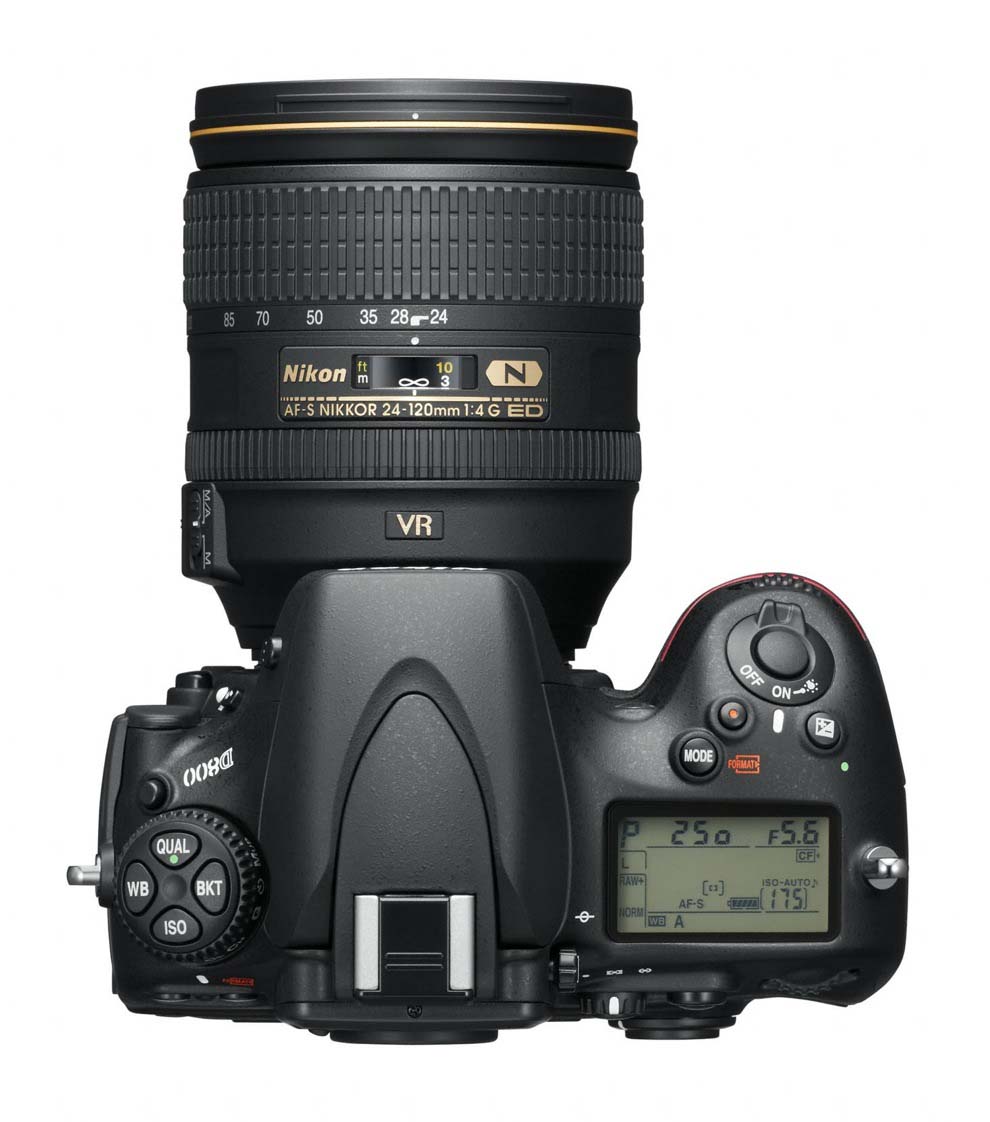
 The Nikon D800 is a full-frame 36 Megapixel DSLR with Full HD video
capabilities. Announced in February 2012, it arrives three and a half
years after the D700, Nikon's first 'affordable' full-frame DSLR. Three
and a half years is a long time in the digital camera industry and to
describe the D800 merely as highly-anticipated feels like an injustice.
This is a camera which many people have been waiting a very long time
for and Nikon has pulled-out all the stops.
The Nikon D800 is a full-frame 36 Megapixel DSLR with Full HD video
capabilities. Announced in February 2012, it arrives three and a half
years after the D700, Nikon's first 'affordable' full-frame DSLR. Three
and a half years is a long time in the digital camera industry and to
describe the D800 merely as highly-anticipated feels like an injustice.
This is a camera which many people have been waiting a very long time
for and Nikon has pulled-out all the stops.